Introduction: Discovering Capri on Foot — Why These 8 Trails Matter
Capri is an island best explored on foot. With cliffs plunging into the Tyrrhenian Sea, hidden coves, pine-scented viewpoints and white alleys lined with chic boutiques, every step reveals a new side of this legendary place. For a first visit, choose routes that showcase the island’s dramatic geography, its historical sites and the elegant atmosphere of Capri and Anacapri. This guide lays out the 8 essential trails for travelers who want a mix of easy hikes, coastal strolls and cultural immersion.
Each itinerary here includes: exact starting points and addresses, practical timing (best hours to go, opening/closing notes), costs when access is paid (in euros) and vivid descriptions so you know what to expect. You’ll also find local tips — how to avoid the crowds in the Piazzetta, where to grab a granita on the way, what shoes to wear, and sporty or relaxed variations depending on your fitness. These routes are suitable for beginner to intermediate hikers: some stretches have rock-cut steps or narrow exposed sections, but none require mountaineering gear.
Capri can be visited year-round, but conditions change with the seasons. Spring and autumn bring lush vegetation and pleasant temperatures; in summer, head out early to beat the heat and the crowds; in winter some services (taxis, shops) are reduced and the sea can be rough on the south coast, making some stretches more dramatic. Prices listed are current at the time of writing and may change: we always note when a trail is free or when a paid service (often a lift) is needed to make the route easier.
The eight chosen trails cover the whole island: iconic promenades like Via Krupp, panoramic ascents like the trail to Monte Solaro and wild coastal routes such as the Sentiero dei Fortini. Each walk highlights a different experience — sea views, Roman remains, scented gardens, rugged shorelines or encounters with local life. If you only have one day I’ll tell you which to combine without rushing; if you have several days I’ll suggest longer versions to deepen the discovery.
To make this guide as useful as possible you’ll find extra practical details: full addresses (including postal codes), recommended departure times, fares in euros (tickets or chairlift), tips on water and shade, and suggestions for foodie stops or unmissable photo spots. Lace up your shoes, bring a hat and your camera: Capri is tailor-made for walking and these eight trails will give you a complete and unforgettable first reading of the island.
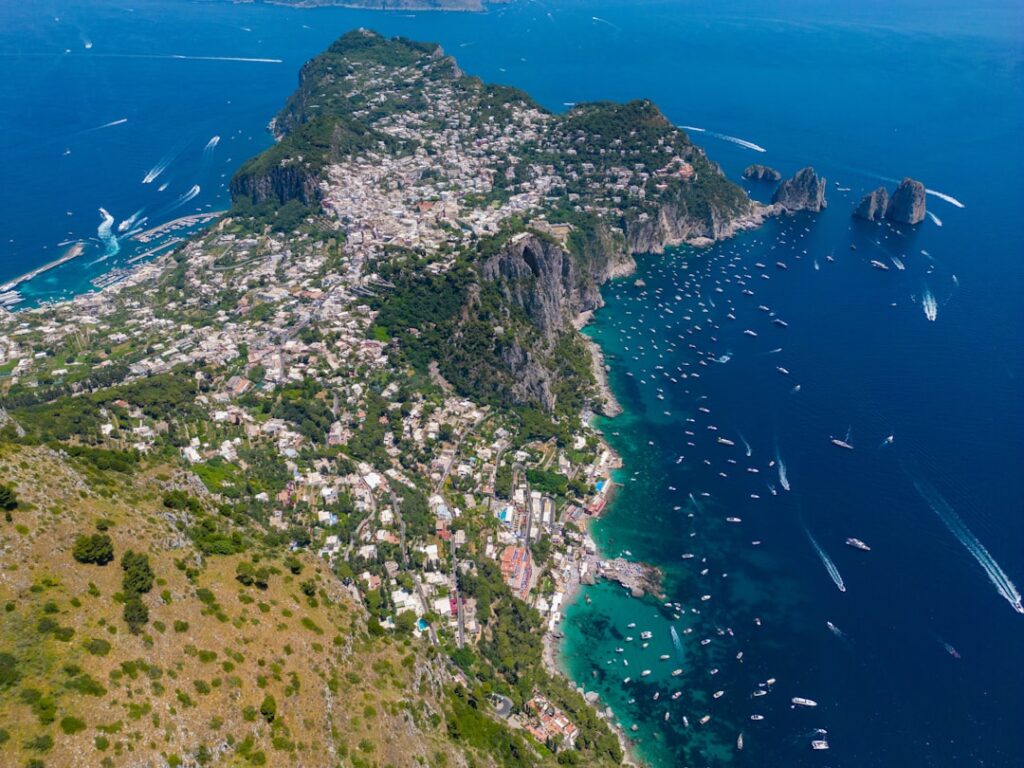
1. From the Piazzetta to Tragara and Belvedere del Pizzo (Via Tragara)
Starting point: Piazza Umberto I (the famous Piazzetta), Piazza Umberto I, 80073 Capri NA, Italy. This urban walk starts in the island’s heart at the Piazzetta, follows Via Vittorio Emanuele then Via Tragara to reach Belvedere del Pizzo. It’s one of the most accessible, iconic strolls for a first visit — perfect in the morning or late afternoon for sunset views.
Recommended times: leave between 08:00 and 10:00 or after 17:00 in summer to avoid crowds. The path itself is public and always open, but shops and cafés around the Piazzetta usually operate from about 09:00 to 22:00. Duration: 30–50 minutes one way depending on stops, roughly 2 km round-trip if you return to the Piazzetta.
Price: Free. No ticket required for the route. Extra costs: coffee at the Piazzetta from €3.50; artisan gelato €2.50–4.00.
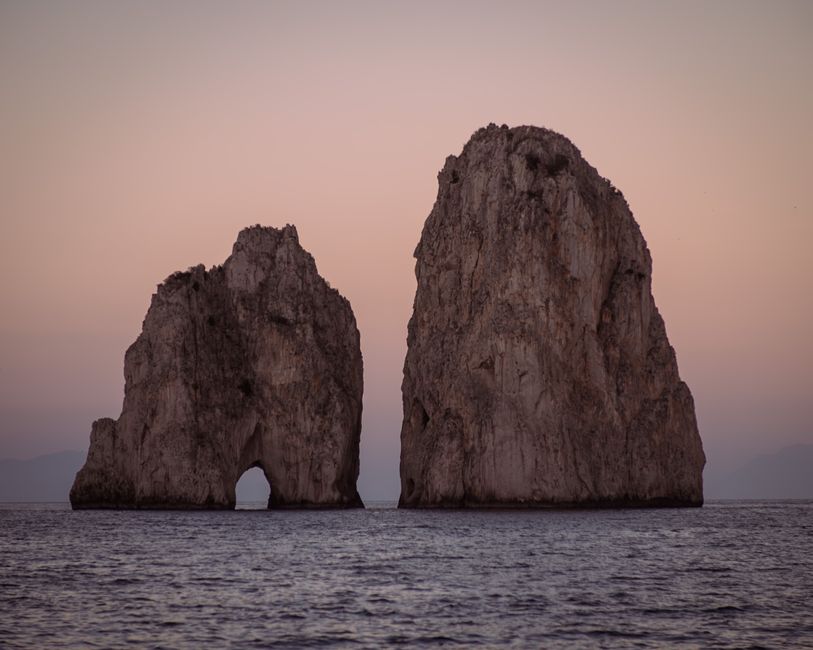
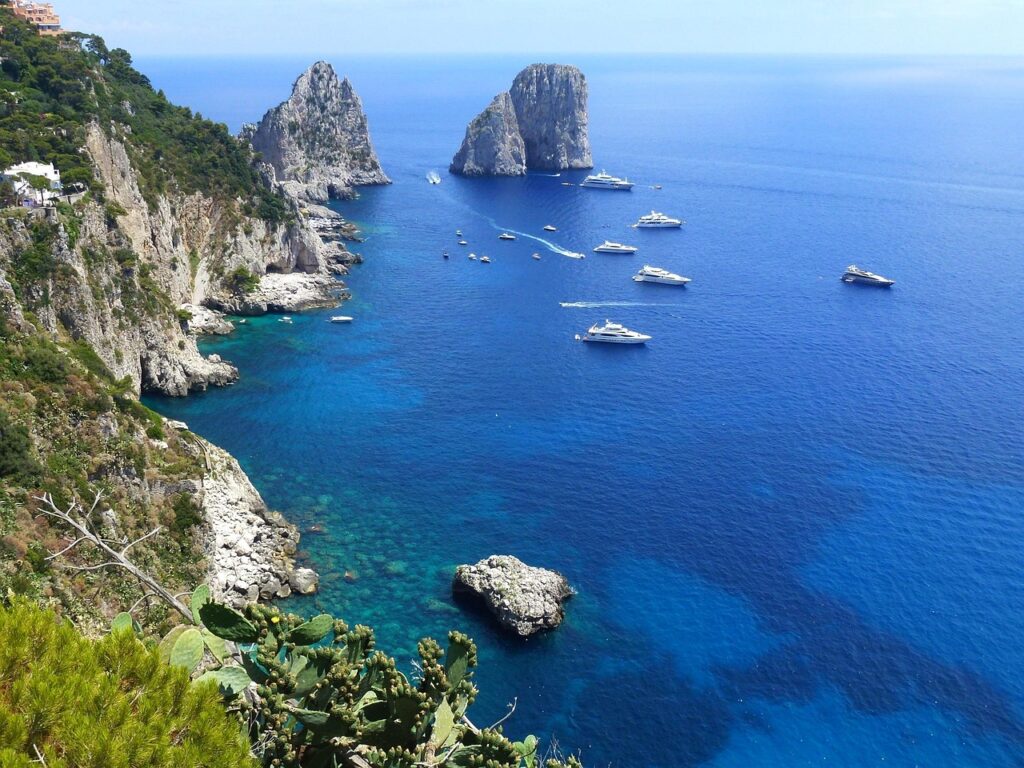
Immersive description: From the Piazzetta (Piazza Umberto I) take Via Vittorio Emanuele, lined with fashion boutiques and terraces. The vibe is elegant, often punctuated by taxis and hurried tourists. After a few minutes turn onto Via Tragara: the alley opens into a pedestrian promenade with stone walls and bougainvillea. The path descends via steps to several viewpoints, including the famous Belvedere del Pizzo, which looks down on the Faraglioni — the three iconic rocks rising from the sea. The scent of pine and citrus follows you around every corner.
Local tips:
- Arrive early for soft light and fewer people at the viewpoint.
- For the classic shot, sit on the Belvedere del Pizzo wall at sunrise — the sea colors are extraordinary.
- Shoes: sturdy sandals or trainers; the ground can be uneven and a few steps are steep.
- To extend the walk, continue toward the panoramic path to Belvedere di Punta Tragara and descend via Via Krupp (check weather and seasonal closures).
2. Via Krupp – the cliff-carved promenade
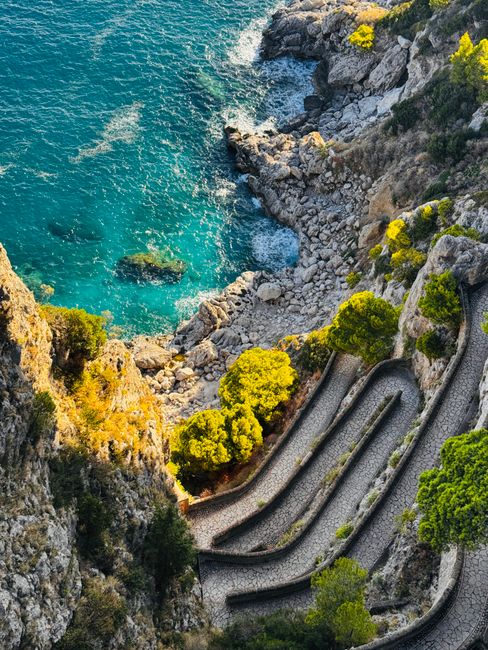
Starting point: Via Krupp, 80073 Capri NA, Italy. The main entrance is near Via Tragara and Marina Piccola. This winding path, built in the early 20th century by German industrialist Friedrich Alfred Krupp, links Capri’s upper town to Marina Piccola, tracing the cliff’s curve.
Hours: Opening varies with the season and sea conditions; generally accessible from 08:00 to 19:00 in high season, but it can be closed at short notice for safety (rockfalls). Before using Via Krupp check notices at the Piazzetta or ask the Capri tourist office, Piazza Umberto I, 80073 Capri NA, tel. +39 081 837 4724.
Price: Free when open. Some sections may be closed and off-limits without prior notice. Extra costs: a stop at Marina Piccola for a drink costs roughly €3.00–6.00.
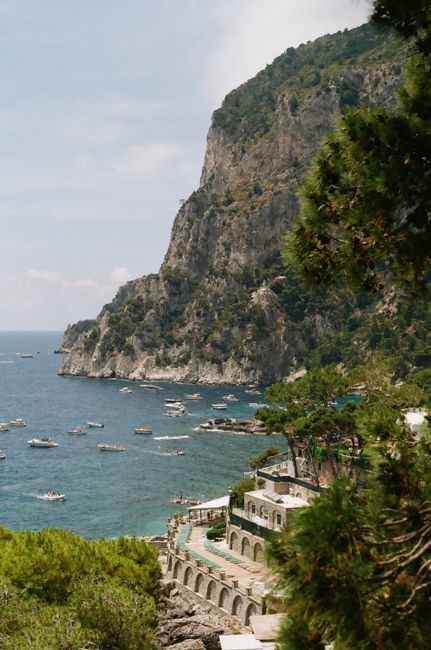
Immersive description: Via Krupp is one of Capri’s most photogenic routes: a paved road with low parapets carved into the cliffside, offering spectacular views of bays and open sea. The path winds in switchbacks and gently descends toward Marina Piccola, where beaches often get glorious afternoon sun. Mediterranean vegetation — rosemary, rockroses and agaves — dots the way. Wind-exposed sections usually bring a welcome salty breeze.
Local tips:
- Avoid Via Krupp on strong mistral days or after heavy rain; safety closures can be imposed without warning.
- If the path is closed, take the alternative route via Via Tragara and descend on the main road toward Marina Piccola.
- Photographers: best viewpoints are in the lower third of the path near wide turns where the cliff opens onto the sea.
- Bring water; there are no sales points along the way.
3. Sentiero dei Fortini (coastal fort trail) – the wild south coast
Starting point: Marina Grande (ferry terminal), Piazzale Marina Grande, 80073 Capri NA, Italy. The Sentiero dei Fortini follows the southwest coast of Capri, connecting a number of old coastal batteries and fortifications (fortini) and offering wild sea vistas rarely seen from the main road.
Hours: Marked trail with free access, recommended between 08:00 and 16:00. Duration: 2.5–3 hours round-trip depending on pace and stops, 6–8 km in total. Allow about 3 hours including photo breaks and swims if weather permits.
Price: Free. Possible paid services: boat-taxi back from isolated coves (if you opt to return by sea), roughly €10–25 depending on distance and bargaining.
Immersive description: From Marina Grande the trail soon moves onto rocky sections and stone steps. The fortini, 19th-century military relics, stand like watchposts above the sea. Panoramas follow one after another — small turquoise inlets, vertical cliffs and sea caves sculpted by wind and waves. The low, fragrant vegetation includes lemon thyme, mastic and wild orchids in spring. In summer the clear water tempts you to swim from accessible rocks, but be mindful of currents.
Local tips:
- Closed-toe hiking shoes are mandatory: flexible but grippy (avoid flip-flops).
- Bring 1.5–2 liters of water per person in summer and a salty snack for energy.
- Mobile coverage is patchy; download an offline map of the route (e.g. via Maps.me).
- Respect the ruins: don’t climb unstable structures to avoid falls and damage.
- If you want to shorten the walk, taxis or the local Capri bus can take you back to Marina Grande from other points. Local bus: Piazzetta — Marina Grande, fares around €2.00–2.50.
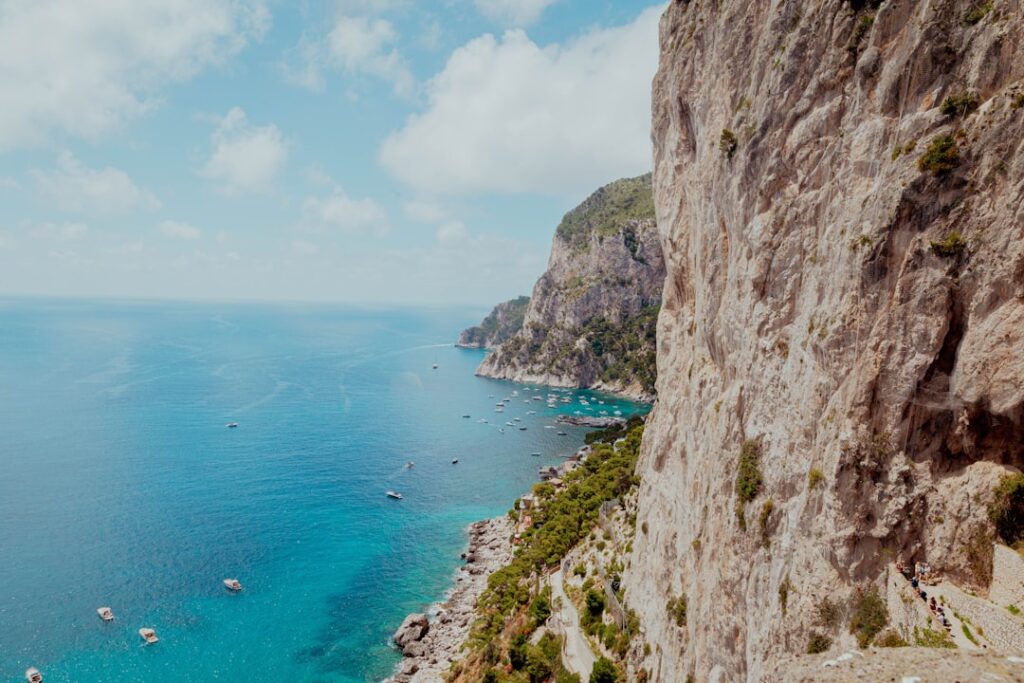
4. Monte Solaro via Anacapri – panoramic ascent and return on foot
Starting point: Anacapri, Piazza Vittoria, 80071 Anacapri NA, Italy. The climb to Monte Solaro is often done using the chairlift (Seggiovia), but walkers who prefer to hike can take the trail up to the island’s highest point (589 m).
Chairlift hours: Anacapri – Monte Solaro chairlift typically runs from 09:00 to 18:00 in high season (hours may extend in summer). Chairlift price: about €12.50 round-trip; one-way tickets around €7.50 (seasonal rates may vary). Ticket office: Piazza Vittoria, 80071 Anacapri NA, Italy.
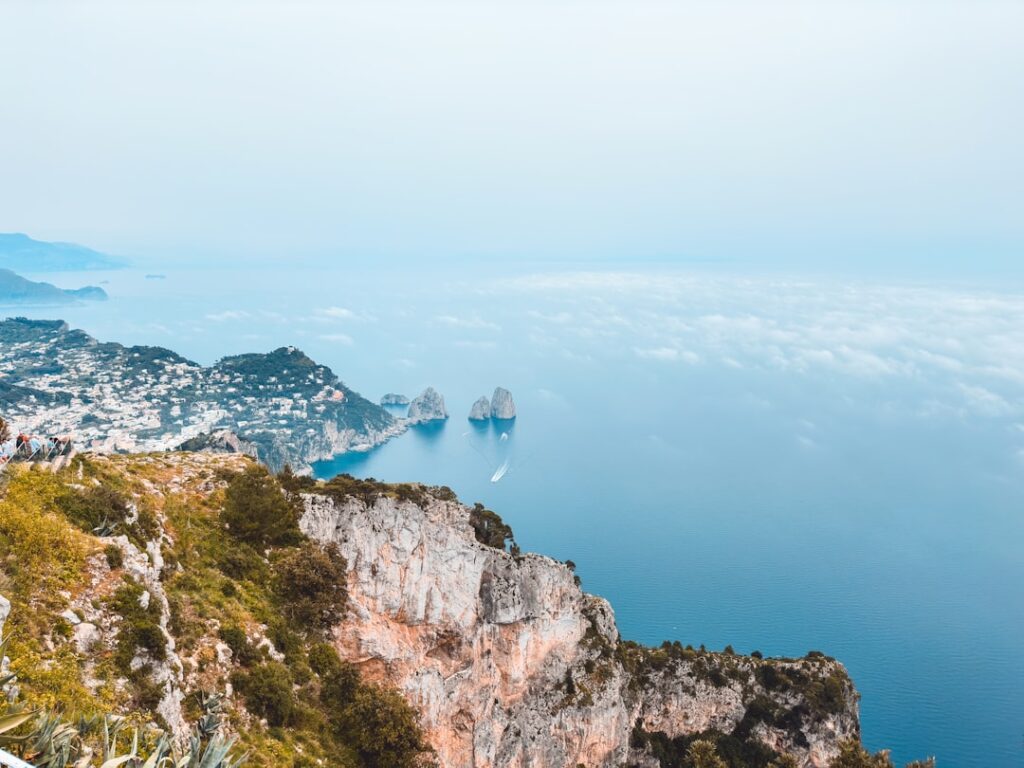
Immersive description: If you hike up, expect tight switchbacks, stone steps and compacted earth sections. The ascent crosses fragrant scrubland and gradually widening views over the Bay of Naples, Ischia and Procida. At the summit the Monte Solaro terrace offers 360° panoramas: the Faraglioni to the south, the eastern bay and the mainland with Vesuvius on the horizon. There’s a small seasonal cafeteria at the top; an espresso costs about €2.00–3.00.
Local tips:
- If you run out of energy on the way up, take the chairlift down (or vice versa); the view from the lift is outstanding.
- In summer set off early: the southern exposure makes the climb hot and largely unshaded.
- Photographers: sunrise from Monte Solaro is magical, but check chairlift availability if you need a lift down.
- Accessibility: the summit is not very suitable for those with reduced mobility if you walk up; the chairlift offers some assistance but check ahead for access options.
5. Villa Jovis and the road to Tiberius — an archaeological immersion
Starting point: trailhead from Via Tiberio / Via Roma, near Porta di Tiberio, Capri. Archaeological site address: Villa Jovis, Via Tiberio, 80073 Capri NA, Italy. Villa Jovis is the famous imperial Roman villa of Tiberius, perched on the island’s northeastern tip with breathtaking sea views.
Hours and price: Villa Jovis archaeological site generally open from 09:00 to 19:00 in high season; entrance fees around €4.00–6.00 per person (indicative and subject to seasonal changes). Cash payment is often required; check the local ticket office at the site entrance. Duration: allow 1.5–2 hours to climb, visit the ruins and descend.
Immersive description: The route follows a historic path alternating rock-cut steps and stretches lined with low walls. As you climb you’ll feel history all around — fragments of walls, scattered bas-reliefs and ancient cisterns appearing among the vegetation. Villa Jovis, though partly ruined, still conveys the scale of imperial architecture: baths, reception rooms and a sequence of terraces offering the most spectacular viewpoint over Capri’s north coast and the sea toward the Sorrento peninsula.
Local tips:
- Book a guided tour if you want an in-depth historical narrative; local guides are available at the start (prices vary, €60–120 for a small group depending on duration).
- Wear a hat: the upper terraces are exposed to direct sun.
- Photographers: late afternoon light creates dramatic contrasts on the ruins and sea.
- If you’re short on time, combine this visit with a stop at Marina Grande (descend via the trail) for a seafood lunch.
6. Sentiero dei Fiori and the garden-and-cliff promenade
Starting point: near Via Camerelle, Piazza Vittoria area (access depends on section), Capri, Via Camerelle, 80073 Capri NA, Italy. The Sentiero dei Fiori (path of flowers) isn’t a single official trail throughout but rather a set of walks linking private gardens, small parks and flowered viewpoints on the island’s east side.
Hours: Free access on public sections; private gardens and some viewpoints may have limited opening hours (some hotel gardens allow visitors subject to a purchase). Duration: walks can be adapted from 45 minutes to 2 hours.
Price: Free for public sections. Occasional entrance fees for private gardens or museums: €5–15 depending on the place. Example: the Augusto Gardens (or Villa San Michele in Anacapri is paid) — addresses and fees are listed below if you want to combine visits.
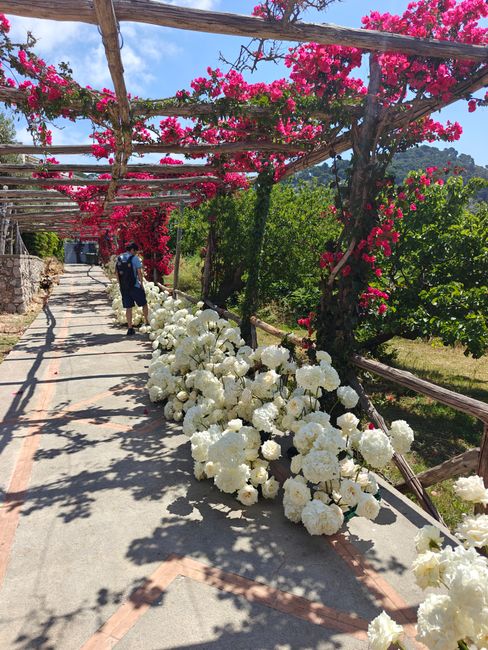
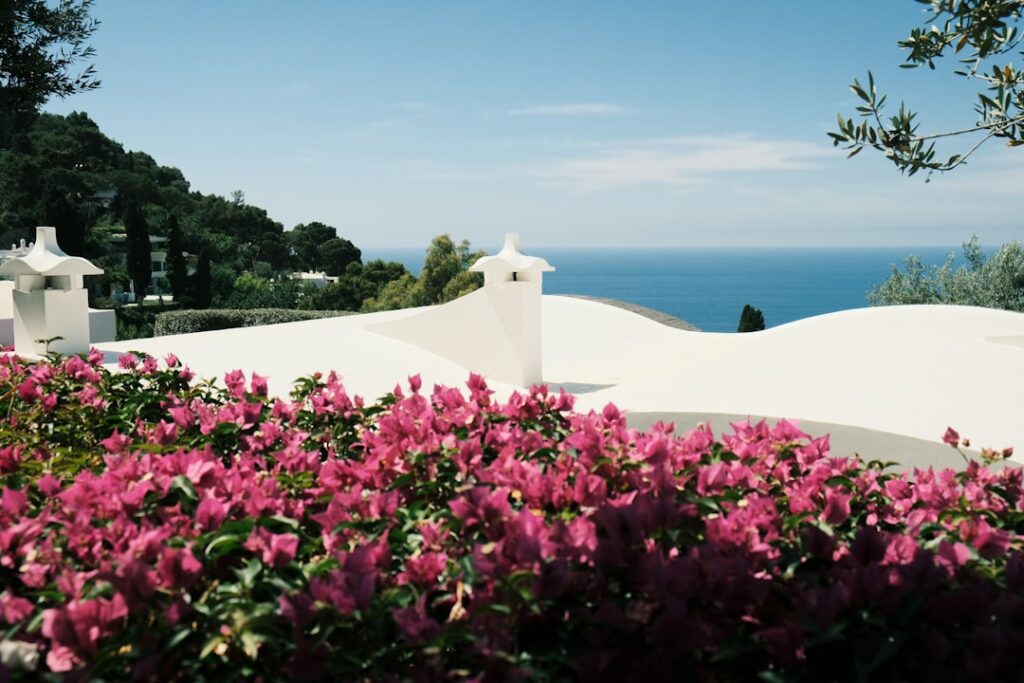
Immersive description: This route focuses on Mediterranean vegetation and the little green oases sprinkled around Capri. You’ll pass by private gardens sometimes visible from the street, terraces planted with jasmine and bougainvillea, and arrive at viewpoints where small alpine flowers push through the rock. The atmosphere is more intimate than at the big tourist overlooks: you’ll hear birdsong, bees and the distant hum of boats.
Local tips:
- Respect private property: don’t enter closed gardens without permission.
- If you want to visit a notable garden, combine the walk with Villa San Michele (see details below) in Anacapri: Via Capodimonte, 80071 Anacapri NA, Italy — usually open 09:00–19:00; ticket around €8–12.
- Perfect for botany fans: visit in spring (March–May) for a burst of flowers and scents.
- Stop for a lemon granita at a local gelateria after the walk (average €3.00–4.50).
7. Punta Carena Lighthouse walk and the southwest coves
Starting point: often started from Marina Grande or Anacapri. Lighthouse address: Faro di Punta Carena, Via Faro, 80071 Anacapri NA, Italy. This walk explores the island’s southwest tip around the Punta Carena lighthouse, one of Capri’s most photogenic and rugged spots.
Hours: The lighthouse and surrounding area are publicly accessible at all times. The site is especially popular late afternoon and at sunset. Duration: 1.5–2.5 hours depending on variants and swims; roughly 4–6 km round-trip if starting from Anacapri.
Price: Free. Parking/taxi: if you take a taxi from the Piazzetta or Marina Grande expect €12–25 per ride depending on origin and time.
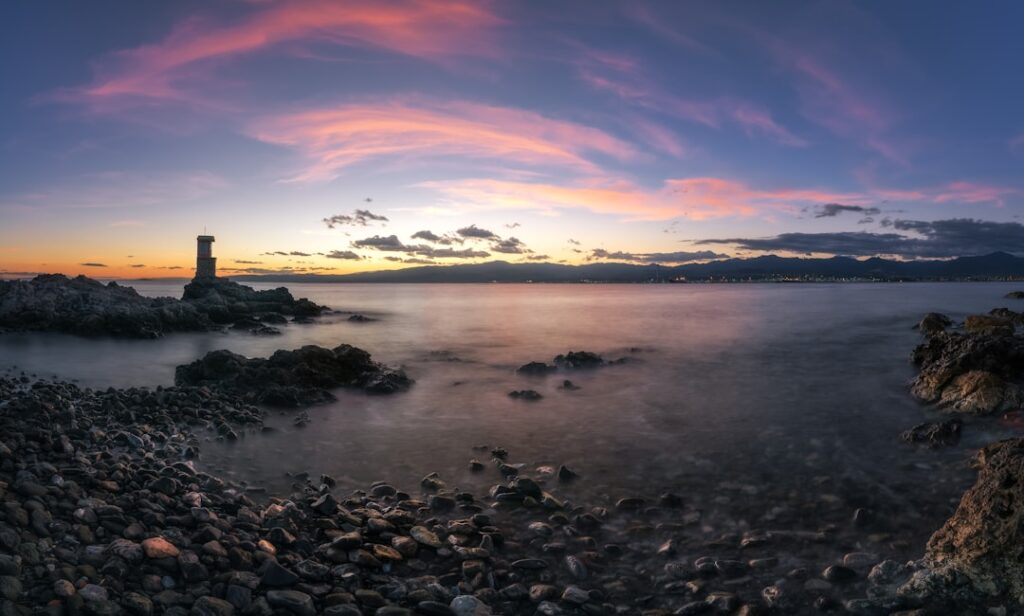
Immersive description: Walking the cliffs toward Faro di Punta Carena reveals very different scenes from central Capri: stronger waves, basalt rocks and escarpments with small natural pools. The white lighthouse stands sentinel over a sometimes wild coastline; the low evening light makes it an excellent photography spot. The coves around the lighthouse are ideal for quiet swims away from main beaches, but access often requires steep stairs.
Local tips:
- Bring a swimsuit and towel in a light bag — a dip in a natural pool is a refreshing reward.
- Be careful of waves near the edge; some rocks are slippery.
- Take a taxi back at night if you’re tired: public lighting is limited on some stretches.
- For a full circuit, combine with a visit to Marina Piccola and stop at a local bar/restaurant for an insalata caprese (average €10–18 per portion).
8. Anacapri circuit – the mills route, Via Migliara and the Sentiero di Tiberio
Starting point: Anacapri, Piazza Vittoria, 80071 Anacapri NA, Italy. This circuit links several historic lanes in Anacapri: the mills’ road (Via le mulini), Via Migliara, and peripheral trails tied to local history with views over Capri and the Bay of Naples.
Hours: Free access. Duration: 2–3 hours for a full loop with stops, 5–7 km depending on variants. Ideal for relaxed afternoons and cooler days.
Price: Free. Optional entrances: Villa San Michele (Anacapri), Via Capodimonte, 80071 Anacapri NA — ticket around €8–12; local museum or temporary exhibitions €3–8.
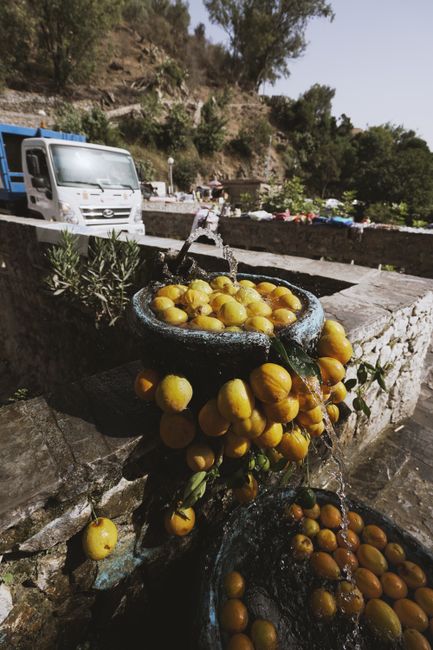
Immersive description: Anacapri feels more village-like and authentic than Capri town. Along the mills’ road you’ll pass peaceful hamlets, citrus groves and old agricultural buildings. Via Migliara climbs with views over the island’s western slope and, on clear days, the Gulf of Naples and Vesuvius. The Sentiero di Tiberio reconnects toward the north coast if you want to intersect the Villa Jovis route. Restored mills, now sometimes workshops or small exhibits, recall the island’s rural past.
Local tips:
- Stop at Café Bar Internazionale (a traditional Anacapri café) for an espresso around €1.50–2.50.
- If you visit Villa San Michele, treat yourself to the museum terrace for a contemplative break — it’s often quieter than viewpoints in Capri town.
- For a cultural fix, check local listings: concerts and exhibitions frequently take place in small churches and venues in Anacapri (discounted entry).
- Take time to wander the lanes after the hike: artisans sell ceramics, handmade sandals and citrus-scented products.
Conclusion: Planning your first walking discovery of Capri
These eight trails give a well-balanced entry for anyone discovering Capri for the first time: elegant urban strolls (Via Tragara and the Piazzetta), historic routes (Villa Jovis), panoramic climbs (Monte Solaro), wild shorelines (Sentiero dei Fortini, Punta Carena) and authentic village vibes (Anacapri). Together they reveal the island’s many faces — discrete luxury, imperial history, Mediterranean nature and outstanding maritime panoramas.
To plan your visit, here’s a practical summary:
- Day 1: Piazza Umberto I – Via Tragara – Via Krupp – Marina Piccola. Do the morning to avoid crowds; lunch at Marina Piccola (fresh fish, about €18–30 per person depending on restaurant).
- Day 2: Monte Solaro (hike or chairlift, chairlift ~€12.50) and explore Anacapri (Villa San Michele if you like).
- Day 3: Sentiero dei Fortini and Villa Jovis for a more active, history-filled day.
- Day 4: Punta Carena and the southwest coves, finishing with a sunset at the lighthouse.
A few extra practical recommendations:
- Maps and information: Capri tourist office, Piazza Umberto I, 80073 Capri NA, Italy — opening hours vary; check locally for temporary closures or safety notices.
- Safety: always carry water, protect yourself from the sun, wear suitable shoes and obey local instructions on exposed sections.
- Budget: aside from potential tickets (Villa Jovis, Villa San Michele) and the Monte Solaro chairlift, most trails are free. Expect roughly €25–60 per day for food, drinks and occasional local transport depending on your style.
- Respect the place: Capri is fragile — protect nature and private property, avoid littering and favor purchases from local artisans to support the island economy.
In short, Capri is meant to be savored slowly, step by step with contemplative pauses. These eight trails will give you an emotional and sensory map of the island: citrus scents, endless views, rock shaped by time and imperial ruins. Whether you’re after iconic images (Faraglioni, Monte Solaro), quiet moments away from the crowds or authentic village life, this selection guides you through the essentials so you leave Capri with deep memories and, quite likely, an irresistible urge to come back.